
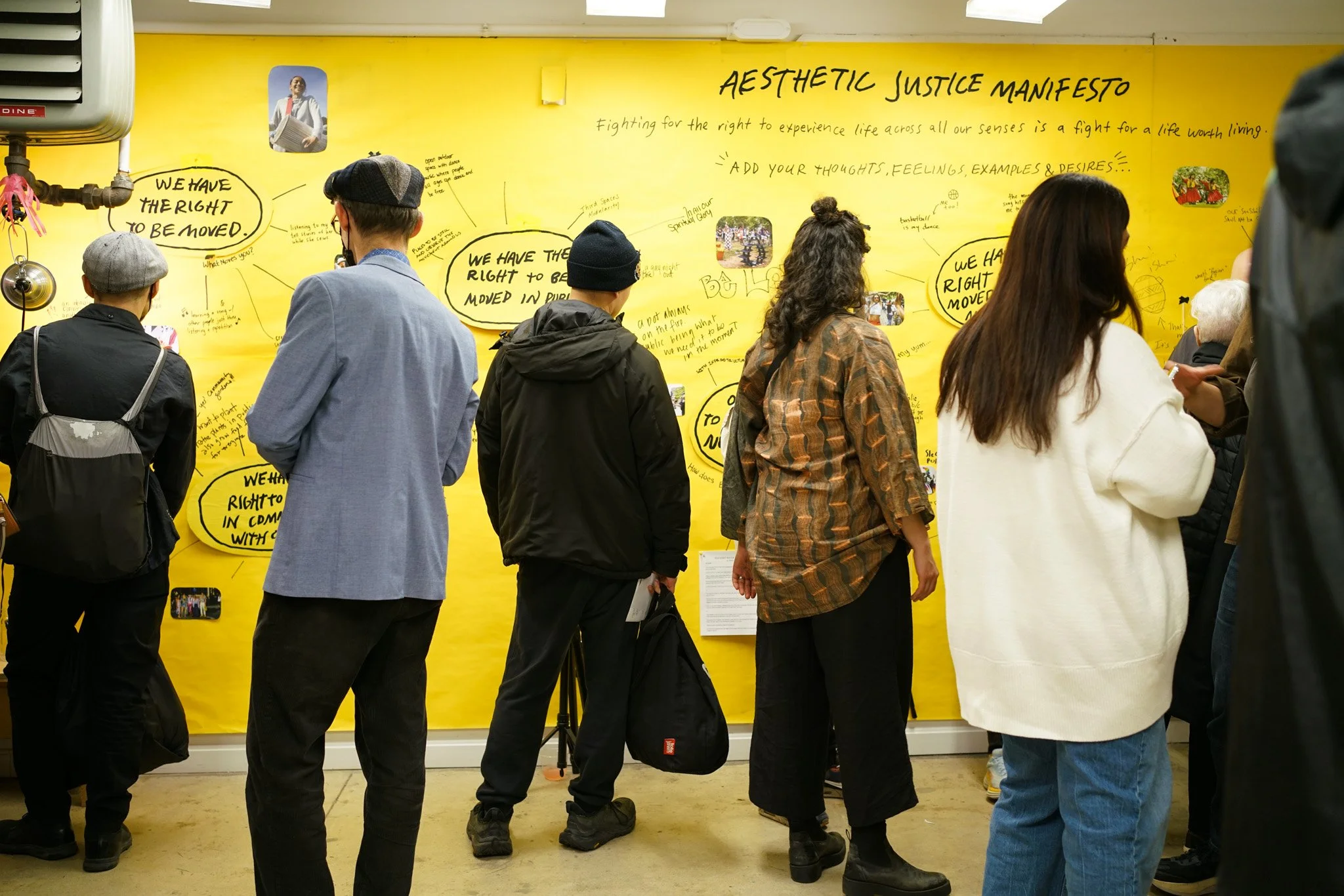
WHAT TO WE MEAN BY AESTHETIC JUSTICE?
In spring 2024, we deepened our collective study of aesthetic justice. We believe that communities of color have long been asked to live in other people’s spatial imaginaries, and that it is time to engage BIPOC communities as co-designers of new community infrastructures.
At DS4SI, we think about aesthetics as the ways in which different people and cultures experience beauty, vitality, and meaning. In much of the U.S., for example, the accepted public aesthetic centers white norms of quiet and calm. When BIPOC and queer communities desire to bring our own sounds, smells, visuals, and other sensorial desires into the public realm, we are often condemned and policed. We consider this aesthetic injustice.
We believe that aesthetic justice is essential to the project of life. Even as we fight for our rights to affordable housing, quality education, livable wages, and more, we want to center our right to experience being moved: the shift in affective and emotional registers that brings exhilaration, joy, tears, and connection. We believe the fight for aesthetic justice is a fight for our lives and a fight for a life worth living.
Classes & Workshops
The semester invited people into the world of human imagination through a range of classes and workshops. Our Book Club, where the books were on us, held reading groups on Trickster Makes This World and Ideas, Arrangements, Effects. Open Gym gave participants space to work through their creative design process with staff feedback and our new toolkit. Mapping Public Infrastructures explored the art of map-making, and Civic Design 1 deepened participants’ understanding of creating change. Folks stepped up their sneaker game in Intro to Sneaker Restoration and Customization, got hands-on in Intro to Screenprinting and Intro to Sewing, found their groove in the Taiko Drumming Intensive, and gathered family and neighborhood histories in Intro to Community Archiving. The season also included a Somatic Workshop.